

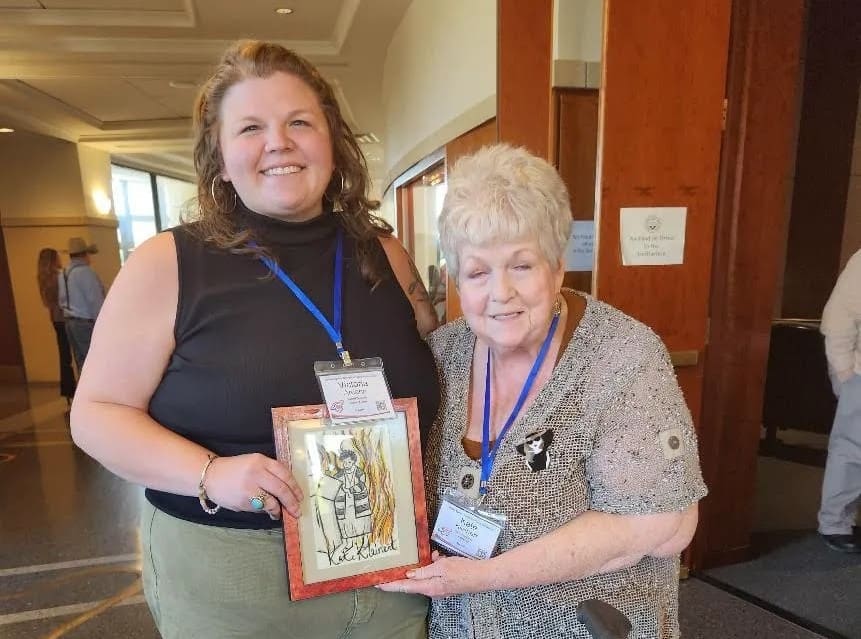
NCVC’s Victoria Arcano attended the United Against Deception: Ultimate Fraud Symposium in Kansas City as a keynote speaker. She was incredibly moved by survivors’ stories and created art in their honor.
“It was really just a way for me to stay present during their stories,” said Victoria, who is a program manager for the Center for Victim Service Professionals and an artist. She is passionate about using art to bring forth healing and reflection to victims, survivors, and advocates.


One survivor, Kate, shared that some time after she was defrauded, her home caught fire. She lost everything, including her home and her six pups.
“The emotion behind her story was too much for me not to draw the flames,” Victoria said. “I was engulfed. I made the flames come from her name at the bottom of the frame and told her that was the impact her story had on me. Kate became emotional and said, ‘No one has ever given me a more thoughtful gift.’”
Debbie, another survivor, shared her story. “GET UP” was what she told herself after she had been robbed, deceived, and was at her lowest. Later, she created a logo, “Rise Up,” that became the message she wanted to share with other survivors. She had never drawn the connection between telling herself to “get up” and later embracing the saying “rise up.”
“My vision for RISE Alliance is a unified symbol that fraud fighters – survivors, advocates, investigators, financial institutions, nonprofits, and others –can rally around,” Debbie said. “A symbol of our collective commitment to prevent, protect, and restore, while reminding us who is at the heart of this fight: the humans targeted and harmed by crime. I don’t draw or paint. My artistry is in creating ideas, connections, and meaningful designs. For me, creativity has never been limited to making something visually appealing. It’s about creating something meaningful – something that connects people, carries a message, and perhaps even makes a difference.”

Beth shared her story of experiencing romance fraud and how she chose not to let it define her. She also discussed how fraudsters exploit the brain’s neurochemistry to manipulate emotions, build attachment, and establish trust. When sharing her story, Beth pointed to another survivor named Sue and said, “I’m so glad she’s here.” Conferences like these give not only the opportunity for professionals to learn best practices, but for survivors to connect with each other.
Sue described how her scammer exploited her role as a provider. She said, “I’ve always been a helper,” and when this trusted person in her life asked for help, there were no red flags. Sue and survivors like her embody bravery by sharing their stories despite the shame, blame, and ridicule their cases face from banking institutions, insurance companies, law enforcement, and even other helpers. Through all that, they are determined to prevent crimes like theirs. Their stories show that the burden of crimes often unjustly falls on survivors.

Sue wants every reader to know that “there is a need for victim support groups.” Victims need access to mental health support. Victims need access to trained advocates competent in the immediate steps to take to stop the bleeding of funds. These are the types of support that help ensure victims of financial crimes do not feel like they are alone.
Art can powerfully turn traumatic stories into hope and healing.
“I really wasn’t intending to share [the art] but I showed each of the survivors their drawings after they shared their story and each of them was so moved,” Victoria said. “I felt like I needed to bring them home, add some details, paint, frame, and gift them. I saw each of these strong women and the quotes on each of the drawings was something that profoundly sat with me. Truly one of the most inspirational experiences I have had. In my opinion, the drawings aren’t the best; the survivor advocates behind them are the real story.”
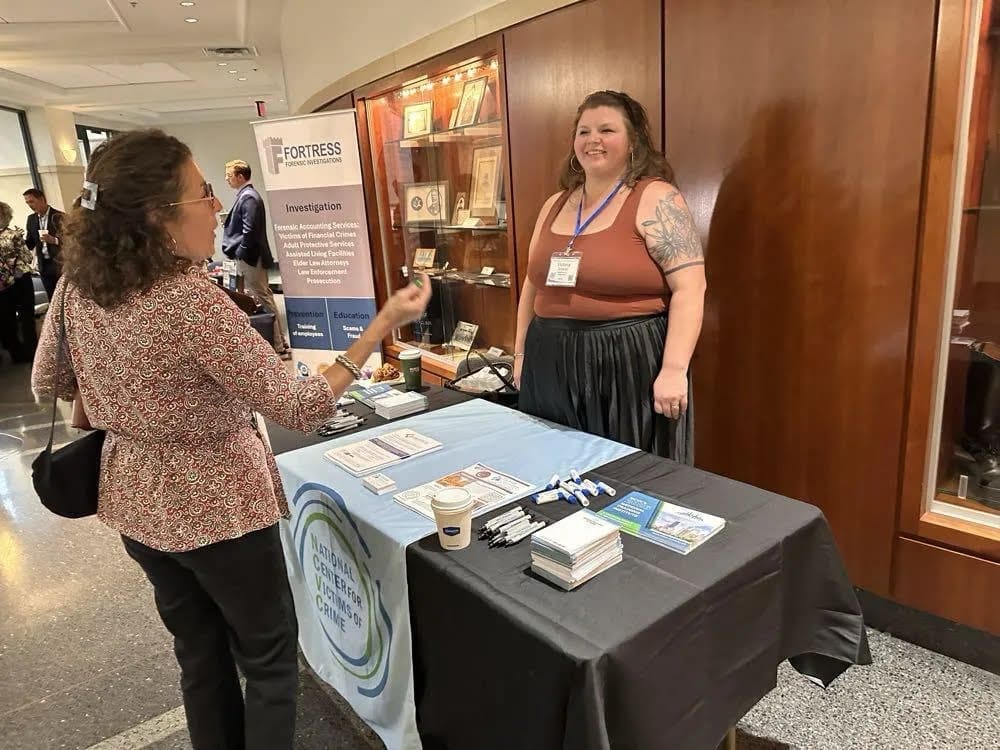
During the conference, Victoria sat on a keynote panel, “The Global Fraud Crisis: Why Collaboration is No Longer Optional,” shared National Center for Victims of Crime resources, and listened to the stories of scam survivors.
Every year, thousands of Americans are robbed of billions of dollars to fraud, romance scams, employment scams, and various other schemes. NCVC is committed to helping scam survivors. Next year, we will begin operating the Scam Justice Legal Clinic, currently a program of Davis Wright Tremaine, Amazon, the Pro Bono Institute, and the Better Business Bureau for Marketplace Trust. It is a first-of-its-kind free resource that connects scam survivors with legal guidance, education, and support designed to help them understand their rights, document fraudulent activity, and protect themselves from future harm.
If you or someone you know is a victim of a scam and needs information, emotional support, or referrals, you can contact our 24/7/265 VictimConnect Resource Center hotline at victimconnect.org. Call or text 855-484-2846.
For more information on the survivors mentioned
- NCVC offers training and technical assistance on financial crimes. Our partners collaborate with us and share resources often. Here are some to name a few:
- Taking Action Guide: An Advocate’s Guide to Assisting Victims of Financial Fraud and Victim Recovery Checklists
- Fraud Awareness Network Peer-to-Peer Group Call (585) 244-8400 and ask for our fraud/scams team.
- Recipients of our services need to be aged 60 or over and have been a victim of a fraud / scam wherein their perpetrator is unknown.
- BBB Scam Tracker & Survival Toolkit
- Give an Hour/fightcybercrime.org mental health and peer support groups
- Identity Theft Resource Center-help center
- AARP-Fraud Watch Network-victim support group, weekday helpline
- FINRA Helpline for Seniors, FINRA broker check
- Global Anti-Scam Alliance (GASA): international organization that brings together public and private sector stakeholders to better understand, prevent, and respond to scams. With over 100 member organizations worldwide, including leading financial institutions, technology companies, and government bodies, GASA serves as a collaborative platform for coordinated action against scams (working groups include consumer education, enforcement, intelligence sharing, finance, prevention and intervention, and research)
- Healing from the Psychological Impact of Scams and Fraud



Comments are closed